

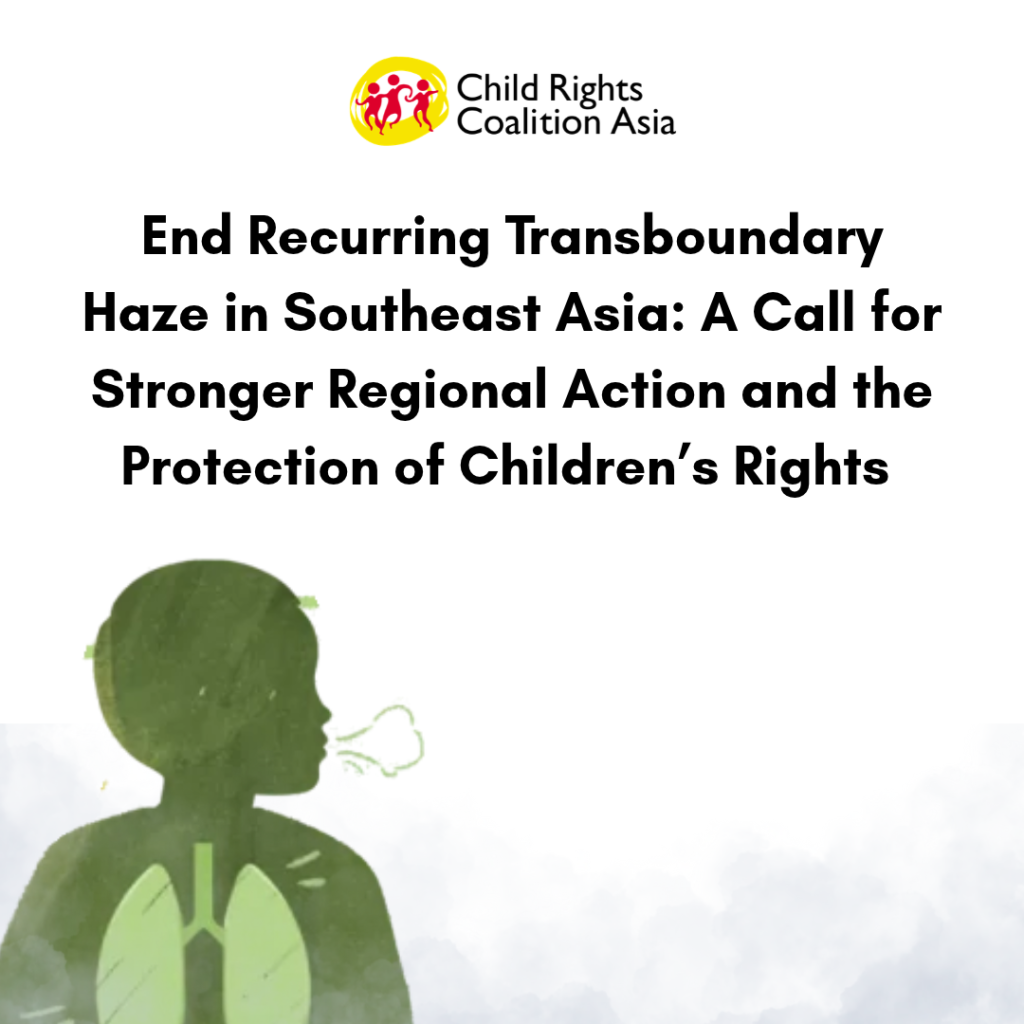
As the ASEAN Summit starts today, November 16, we call for stronger regional action against forest and land fires and the transboundary haze that continues to affect communities across Southeast Asia.
On 26 August, the ASEAN Specialized Meteorological Centre (ASMC) raised its transboundary haze alert to Level 3, the highest level, as prolonged dry weather worsened fires and haze across the southern ASEAN region. The alert has since been lowered, but the effects of the haze have not gone away. This marks the second time this year that the Level 3 alert has been raised, and the sixth occurrence in the past four years. These repeated alerts underscore that transboundary haze is a recurring regional concern that requires sustained attention and collective action.
Transboundary haze poses serious risks to everyone’s health and well-being by reducing air quality and increasing exposure to harmful pollutants that can cause respiratory illnesses and other health complications. These risks are particularly concerning for children, as their lungs and immune systems are not fully developed. Exposure to fine particulate matter in haze triggers inflammation, permanently stunt lung growth, and reduce overall lung capacity into adulthood.
Emerging studies have also linked pregnant women’s exposure to fine particulate matter, particularly during the second trimester, to an increased risk of asthma in early childhood of their children. This highlights how the effects of haze can begin even before birth, potentially affecting unborn children and extending across generations.
Beyond its immediate health impacts, transboundary haze also threatens children’s overall well-being, disrupts their education and daily activities, and puts their future and right to a safe, clean, and healthy environment at risk.
School closures and suspended outdoor activities interrupt learning, play, and social interaction that are crucial for their growth and development. At the same time, children without reliable access to the internet, devices, or conducive learning spaces at home are at greater risk of falling behind.
For families whose livelihoods depend on farming, fishing, and other land- and water-based activities, the economic consequences of fires and haze can also make it more difficult to meet children’s basic needs. Children living in poverty, indigenous communities, and those with disabilities or existing health conditions often have less resources to protect themselves and recover from environmental hazards.
Without stronger action to address the underlying causes of forest and land fires, children across the region will remain exposed to the health, social, and developmental impacts of transboundary haze.
We call on ASEAN Leaders and Member States to:
Strengthen accountability and regional cooperation. Fully implement the ASEAN Agreement on Transboundary Haze Pollution and its accompanying Roadmap. Address the activities that drive forest and peatland fires, strengthen enforcement, prevent recurrence of haze, and ensure that businesses are held accountable for environmental harm across their operations and supply chains.
Address the impact of transboundary haze on children and vulnerable groups. Ensure adequate protection and support measures during and after haze episodes. Strengthen access to timely and child-friendly air quality information, health care, and clean-air spaces. Ensure that schools have clear protocols and learning continuity plans that do not leave disadvantaged children further behind.
Engage children and affected communities. Establish safe, inclusive, and accessible opportunities for children and young people, particularly those from haze-affected and indigenous communities, to participate in environmental decision-making and designing haze prevention and response measures. Their views must inform policies and programs, so that they reflect lived experience and actual needs of affected people.
ASEAN has recognized the right to a safe, clean, healthy, and sustainable environment and committed to working toward a sustained reduction in haze pollution episodes and reaching individual national PM2.5 targets by the year 2030. These commitments must translate into sustained action that protects children’s health, supports their development, and ensures their meaningful participation in decisions affecting their environment and future. We also call for a holistic approach to ensuring clean air for children and young people by addressing other sources of air pollution, including mobile and industrial sources, household and residential energy use, and agricultural and waste-related activities. Breathing clean air is a right.
We urge ASEAN to act on the commitments it made in the Declaration on the Right to a Safe, Clean, Healthy and Sustainable Environment. Addressing transboundary haze requires more than emergency responses during periods of poor air quality. It requires stronger regional cooperation, accountability, and long-term measures to prevent forest and land fires and protect affected communities.
About Child Rights Coalition Asia (CRC Asia)
Child Rights Coalition Asia (CRC Asia) is a regional network of child rights organizations working to advance children’s rights and child participation across Asia. CRC Asia works for and with children and young people in advocacy, policy engagement, and consultations on emerging issues affecting children, including digital rights and online safety.
Media Contact
Aira Morales-Factor, Child Rights Coalition Asia
cmorales@crcasia.org
+639451546852


